Custom swimwear printing gives Australian brands more control over the patterns, colors, and visual identity of their collections. When working with a Bali manufacturer, you need to prepare your artwork files, choose compatible swimwear fabrics, confirm print placement, and approve the final colors before bulk production.
However, developing custom printed swimwear involves more than choosing an artwork and sending it to a manufacturer. You also need to consider fabric compatibility, print scale, pattern placement, color accuracy, and how the design will look once the fabric is cut and sewn into a garment.
In this guide, we’ll cover the main considerations for custom swimwear printing, from preparing your artwork to approving printed fabrics before production.
What Is Custom Swimwear Printing?
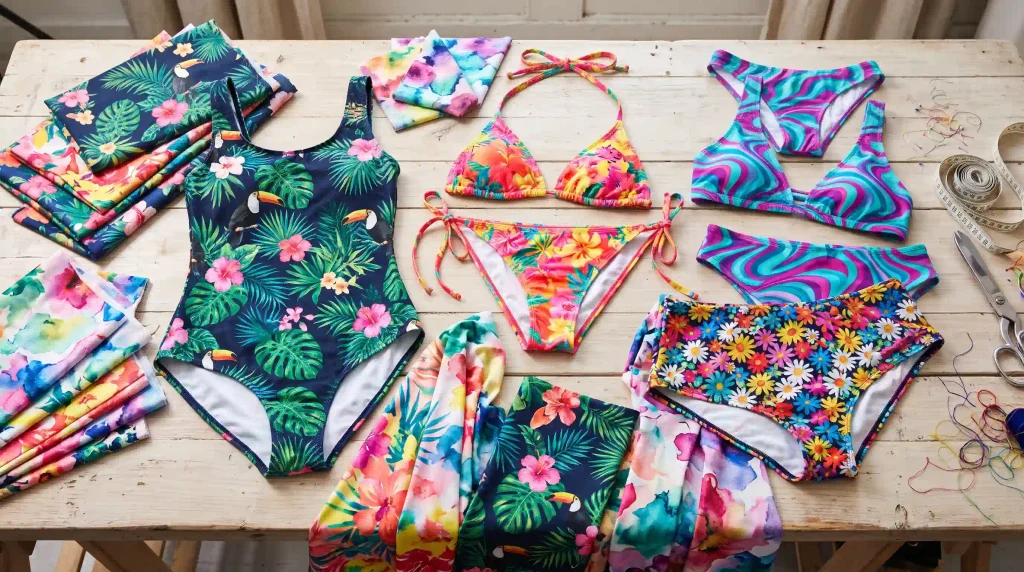
Custom swimwear printing is the process of applying your own artwork, patterns, or color designs to fabric used for bikinis, one-piece swimsuits, and other swimwear products.
Instead of choosing from standard fabric prints, you can develop designs that reflect your brand’s visual identity and collection concept.
For example, you might create a repeating tropical pattern for a bikini collection, a geometric design for a one-piece swimsuit, or a signature graphic that appears across several products.
The printing method, artwork specifications, and fabric selection all influence the final result. This is why it is important to discuss these requirements with your manufacturer before confirming the production process.
Bali Bikini Manufacturer offers a fabric printing and sublimation service to help brands develop custom printed swimwear fabrics in Bali.
1. Prepare Your Artwork for Custom Swimwear Printing
Your artwork is the starting point for custom swimwear printing. Before submitting your design, make sure the files contain enough information for the manufacturer to understand how the print should look on the fabric.
Choose the Right Artwork File Format
Provide a high-quality digital file that can be used for the intended printing process.
Bali Bikini Manufacturer accepts high-resolution vector and raster artwork files, including:
- Adobe Illustrator (AI).
- PDF.
- Photoshop (PSD).
- TIFF.
Vector files are useful for artwork that needs to maintain clean lines and scalable elements. Raster files are suitable for detailed illustrations, photographs, and complex graphic designs.
For raster artwork, prepare a resolution of at least 300 DPI at the intended print size, following the manufacturer’s artwork requirements. You can also read Adobe’s guide to resolution specifications for printing images to understand how image resolution affects print quality.
Before exporting your files, check that the artwork dimensions match the required print layout. A file that looks sharp on a small screen may not maintain the same quality when enlarged for fabric printing.
If you are unsure about the required file setup, ask your manufacturer for the specifications before preparing the final artwork.
Set the Print Dimensions and Pattern Repeat
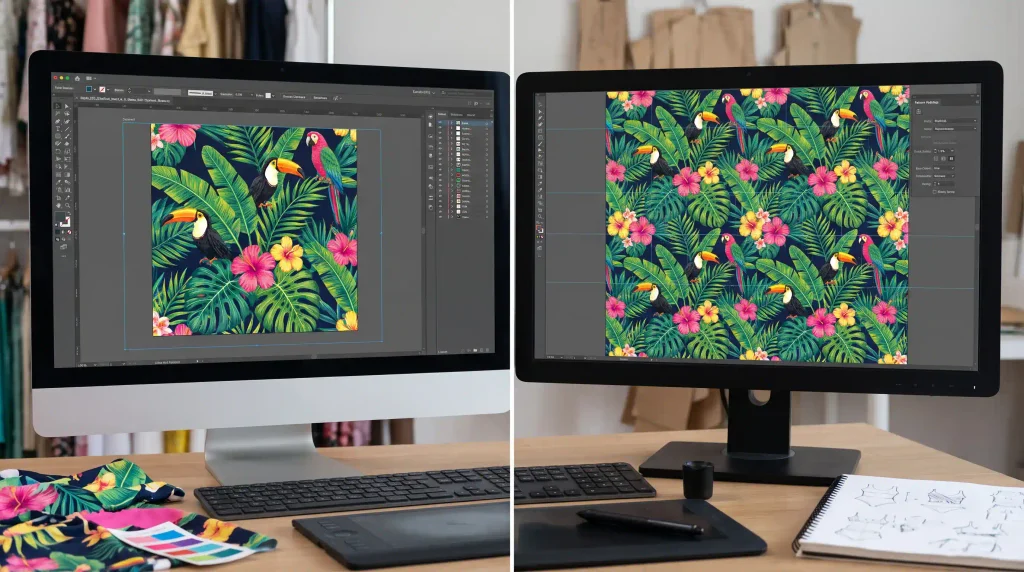
If your design uses a repeating pattern, specify the intended repeat size.
A repeat pattern is a design arrangement that can be reproduced continuously across the fabric without obvious breaks between individual tiles.
For example, if your artwork contains flowers, leaves, or other decorative elements, the repeat size determines how frequently these elements appear across the fabric.
Your artwork brief should include:
- Overall pattern dimensions.
- Repeat tile size.
- Horizontal and vertical repeat direction.
- Intended motif scale.
- Spacing between design elements.
Make sure your repeating artwork is seamless, meaning the edges of the design connect naturally when repeated.
This is particularly important for swimwear because the printed fabric will later be cut into different pattern pieces. Visible gaps or awkward transitions between repeat tiles can affect the overall appearance of the finished garment.
Provide Color References and Artwork Notes
Alongside your artwork files, provide clear instructions about the intended colors and print appearance.
Include your preferred color references, especially when your design uses signature brand colors or requires consistency across multiple products.
You should also identify any elements that must remain unchanged, such as specific motif proportions, logo placement, or colour combinations.
The more clearly you communicate these requirements, the easier it is for your manufacturer to understand the intended result before printing begins.
2. Choose a Suitable Fabric for Custom Swimwear Printing
Not every swimwear fabric is suitable for every printing method.
Your fabric selection affects how the artwork transfers onto the material, how colors appear, and how the finished garment feels and performs.
Before finalizing your design, discuss the fabric composition and printing compatibility with your manufacturer.
Polyester-Based Swimwear Fabric
Digital sublimation is a commonly used option for printing on polyester-based swimwear fabrics.
The process uses heat to transfer dye into the polyester fibres rather than simply placing a layer of ink on the fabric surface.
This makes sublimation suitable for colorful designs, intricate artwork, and repeating patterns that require detailed reproduction.
It can also help preserve the fabric’s original hand-feel and stretch because the dye becomes integrated into the fibres.
For swimwear, fabric compatibility still matters. Check the specific material composition and construction before choosing sublimation for your collection.
Nylon and Spandex Swimwear Fabric
Nylon and spandex blends are also widely used for swimwear because of their stretch, flexibility, and smooth feel.
However, standard sublimation is not suitable for every nylon-based fabric.
For certain nylon/spandex blends and specific design requirements, direct-to-fabric printing may be a more appropriate option. This method uses specialized inks designed for materials that are not suitable for conventional sublimation.
The right approach depends on the exact fabric composition and printing requirements.
If your collection uses nylon-based swimwear fabric, discuss available printing options with your manufacturer before finalizing the artwork.
Recycled Swimwear Fabric
If your collection uses recycled materials, check the fabric composition before selecting the printing method.
Recycled swimwear fabrics can use different fibre compositions, so they don’t automatically share the same printing requirements.
For example, a recycled polyamide blend and a recycled polyester-based material may require different printing considerations.
Ask your manufacturer to confirm whether the selected material is compatible with your intended artwork and printing process.
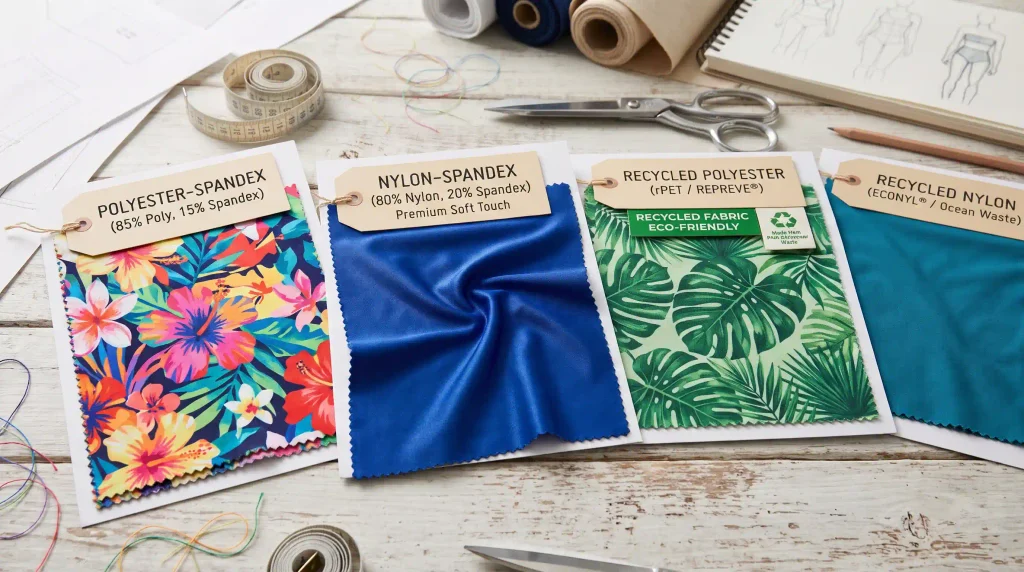
If you are still deciding on the material, read our guide on how to choose good-quality fabric for swimwear to understand the properties that matter when developing a swimwear collection.
3. Plan Print Scale, Placement, and Direction
Once you have prepared your artwork and selected a suitable fabric, consider how the print should appear on the finished garment.
A design may look balanced when viewed as a full digital image but appear differently once the fabric is cut into individual pattern pieces.
This is why print scale and placement deserve attention before production.
Choose the Right Print Scale
Print scale refers to the size of the individual elements within your artwork.
For example, a floral design may use small, repeated flowers for a subtle appearance or larger motifs to create a more noticeable visual effect.
Consider how the scale works with the garment’s dimensions and silhouette.
A large motif may look attractive on the front panel of a one-piece swimsuit but become less recognizable when divided across smaller bikini panels.
Think about:
- The size of the garment panels.
- The proportions of the printed motifs.
- The distance between repeating elements.
- How much of the artwork remains visible after cutting and sewing.
Provide your manufacturer with a clear reference for the intended print scale rather than relying on the artwork preview alone.
Specify Print Placement
Print placement explains where specific design elements should appear on the finished garment.
This is especially important when your artwork contains logos, large illustrations, or motifs that need to appear in particular positions.
For example, you may want a floral motif positioned near the centre of a bikini top or a specific graphic placed along the side of a one-piece swimsuit.
Include placement references in your design brief and indicate which elements are essential to the finished appearance.
Also consider whether you want an all-over print or a more controlled placement.
An all-over print uses a repeating design across the fabric, while a placement print focuses on particular graphic elements or positions.
The two approaches involve different artwork and cutting considerations.
Check Pattern Direction and Alignment
Some designs have a clear visual direction. Stripes, leaves, illustrations, and other directional motifs may look different when the garment panels are rotated or arranged differently.
Tell your manufacturer whether the print needs to follow a particular direction.
If your design includes stripes or other elements that should align across seams, make this requirement clear before production.
Keep in mind that exact motif placement and alignment can depend on the cutting layout, garment design, and available fabric. Discuss important placement requirements early so the manufacturer can assess what is practical.
4. Approve Colours Before Bulk Printing
Color is one of the most important parts of custom swimwear printing, particularly when your brand uses a defined color palette.
However, a color displayed on your computer or phone screen may not look exactly the same when printed on physical fabric.
Screen settings, display brightness, color profiles, and the characteristics of the selected material can all affect how a color appears.
This is why manufacturers need more than a screenshot to understand your intended color.
Provide Pantone Color References
Pantone references can help communicate your preferred colors more clearly.
For textile applications, Pantone’s Fashion, Home + Interiors system includes TCX references designed for textile and apparel materials. You can learn more about the Pantone Fashion, Home + Interiors colour system when preparing colour specifications for your collection.
Instead of relying on descriptions such as ocean blue, dusty pink, or warm beige, provide the relevant color reference whenever possible.
For example, if your swimwear collection uses a specific shade across multiple products, a consistent color reference gives the manufacturer a clearer starting point for color matching.
However, a colour reference should be treated as a target rather than an automatic guarantee of an identical printed result. The selected fabric and printing method still influence the final appearance.
Request a Print Strike-Off Before Bulk Printing
A print strike-off is a small test print produced before the larger quantity is printed.
It allows you to review how your artwork and colors appear on the selected fabric.
This step is especially useful when your design contains several colors, subtle shades, or detailed graphics that need to reproduce accurately.
When reviewing a strike-off, check:
- Whether the colors match your intended references.
- Whether the artwork looks sharp and clear.
- Whether the print scale is correct.
- Whether the pattern repeat looks seamless.
- Whether the overall appearance suits your collection.
For swimwear, you should also review how the printed fabric looks when stretched. This helps you assess whether the artwork remains visually balanced when used in a garment designed to fit closely against the body.
If the result needs adjustment, communicate the changes clearly before approving the print for bulk production.
Bali Bikini Manufacturer’s printing workflow includes color consultation and test swatches for customer approval before bulk printing.
5. Inspect the Printed Fabric Before Approving Production
Color approval is important, but it should not be the only consideration when reviewing your printed fabric.
The fabric must also suit the intended garment and maintain the appearance required for your collection.
Once you receive the printed sample or strike-off, assess the following details.
Color Consistency
Check whether the printed result matches the approved colour reference and strike-off.
If your collection includes several colorways, review each one separately. Different color combinations may produce different results, even when they use the same artwork.
Print Clarity and Detail
Look closely at the printed design to make sure the details are clear.
Check for blurred artwork, unwanted marks, incomplete prints, or visible inconsistencies in the pattern.
This is especially important for detailed illustrations and designs containing small elements.
Pattern Repeat and Registration
Registration refers to how accurately printed design elements align with one another.
For repeating patterns, check whether the design connects properly across the repeat.
If your artwork contains multiple colors or overlapping elements, review whether they appear in their intended positions.
Fabric Appearance and Stretch
Your printed fabric should still suit the construction and intended fit of the garment.
Check its hand-feel, stretch, and recovery against the requirements of your design. You should also review how the print appears when the fabric is extended.
If the material feels or behaves differently from what you expected, discuss the issue before approving it for cutting and sewing.
For more details about how garment materials and finished products are inspected, see Bali Bikini Manufacturer’s quality control service.
6. Understand the Custom Swimwear Printing Process
Working with a manufacturer involves several stages between submitting your artwork and receiving printed fabric ready for garment production.
At Bali Bikini Manufacturer, the custom printing workflow generally follows these steps.
Step 1: Artwork Submission
Send your artwork along with the necessary specifications.
Include the file format, print dimensions, repeat size, placement instructions, and preferred color references.
If you have multiple colorways, organize them clearly so each design variation can be reviewed separately.
Step 2: Color Consultation and Testing
The manufacturer reviews your color requirements and prepares test swatches or strike-offs for approval.
This gives you an opportunity to assess the printed result before confirming the larger printing order.
Discuss any color or artwork adjustments needed at this stage.
Step 3: Fabric Preparation
Once the printing requirements are confirmed, the selected swimwear fabric is prepared for the agreed printing method.
The material may be sourced from the manufacturer’s available fabric options or arranged according to your requirements.
If you are still deciding on the material, discuss fabric availability and printing compatibility before confirming the order.
Step 4: Printing and Curing
The artwork is printed onto the prepared fabric using the selected printing technique.
Depending on the material, this may involve digital sublimation or direct-to-fabric printing.
The printed material then undergoes the relevant curing process as part of production.
Step 5: Printed Fabric Quality Check
Before the fabric moves to cutting and sewing, it is inspected for color consistency, print registration, and visible defects.
Once the printed fabric meets the agreed requirements, it can proceed to the next stage of garment manufacturing.
For brands planning a complete collection, Bali Bikini Manufacturer can also support the transition from approved materials and samples to bulk swimwear manufacturing.
7. Understand Custom Printing Minimums and Production Costs
Custom printing gives your brand more control over the appearance of your collection, but it may involve separate material requirements and costs.
Before confirming an order, ask your manufacturer about the minimum fabric quantity, printing costs, and any additional preparation requirements.
At Bali Bikini Manufacturer, there is no minimum garment quantity per order, style, or colour. However, custom digital printing has a separate minimum requirement of 20 metres of fabric.
This distinction is important when planning your collection.
You may be able to manufacture a small number of garments, but the fabric needed for your custom print still has to meet the applicable printing minimum.
When preparing your production budget, consider:
- Artwork preparation requirements.
- Fabric type and availability.
- Printing method.
- Required fabric metres.
- Number of designs and colourways.
- Sampling and print testing.
- Garment construction and finishing.
If you plan to use several prints in one collection, discuss how the fabric requirements apply to each design with your manufacturer.
It is also worth confirming whether different colourways or repeat patterns require separate printing arrangements.
For a broader breakdown of product development, manufacturing, and other expenses, read our guide to the cost of manufacturing a swimwear collection for Australian brands.
Common Mistakes to Avoid When Developing Custom Swimwear Prints
Custom printing requires coordination between artwork, fabric, and garment construction. A few common mistakes can create unnecessary revisions or affect the finished appearance.
Sending Low-Resolution Artwork
Low-resolution images may lose detail when enlarged for fabric printing.
Prepare high-resolution files and check the image quality at the intended print size before submitting them.
Choosing a Printing Method Before Selecting the Fabric
Different materials have different printing requirements.
Don’t assume that every swimwear fabric can use the same printing technique. Confirm compatibility before finalizing the material and artwork.
Ignoring Print Scale
A design that looks balanced on a digital screen may appear too large or too small on a bikini or swimsuit.
Consider the size of the garment panels and provide clear scale references.
Relying Only on Screen Colors
Computer and mobile screens do not always display colors consistently.
Provide Pantone references and review a physical strike-off before approving bulk printing.
Skipping Print Approval
Moving directly from digital artwork to bulk printing without reviewing a test swatch can increase the risk of unexpected color or design results.
Take the opportunity to check the actual printed fabric and communicate any necessary changes before approving production.
Forgetting About Printing Minimums
No minimum garment order quantity does not automatically mean there is no minimum for custom-printed fabric.
Ask about printing requirements early so you can plan the number of styles, colorways, and fabric meters needed for your collection.
FAQ
Bali Bikini Manufacturer accepts high-resolution vector and raster artwork, including AI, PDF, PSD, and TIFF files. Raster artwork should have a minimum resolution of 300 DPI at the intended print size. You should also provide the pattern repeat dimensions and colour references where applicable.
It depends on the fabric composition and design requirements. Digital sublimation is suitable for polyester-based swimwear fabrics, while direct-to-fabric printing is available for certain nylon/spandex blends and other specific requirements. Confirm the compatible method with your manufacturer before finalizing the material.
Yes, certain nylon/spandex blends can be used with specialized direct-to-fabric printing. However, the suitability depends on the exact material and printing requirements. Ask your manufacturer to confirm the appropriate method for your chosen fabric.
Yes. You can submit your own artwork and specify the intended print scale, repeat size, placement, and colour references. Bali Bikini Manufacturer reviews the requirements and prepares the printing process according to the selected fabric and design.
Bali Bikini Manufacturer has no minimum garment order quantity, but custom digital printing requires at least 20 meters of fabric. Other sourced materials or components may have separate requirements, so confirm the applicable minimums before placing your order.
Final Thoughts
Custom swimwear printing gives your brand more opportunities to create distinctive designs and establish a consistent visual identity.
However, getting the result right requires more than a good artwork file. You also need to consider fabric compatibility, print dimensions, pattern placement, colour references, and physical print approval before moving into bulk production.
By preparing these details early, you can communicate your requirements more clearly and make informed decisions throughout the development process.
If you’re looking for a swimwear manufacturer in Bali, Bali Bikini Manufacturer can support your collection with fabric sourcing, custom printing, sampling, and bulk production.
If you’re looking for a swimwear manufacturer in Bali, contact Bali Bikini Manufacturer to discuss your custom printing requirements and plan the next steps for your Australian swimwear collection.”