
+62 877 169 97783
One of the biggest and most expensive mistakes in the fashion world is believing that you have to invent everything from scratch to start a successful swimwear brand. New business owners often think that to be taken seriously, every strap, seam, cut, and color must be a completely original design that no one has ever seen before. They picture spending months drawing new shapes, making patterns from scratch, and tweaking tiny measurements before even thinking about how to find their very first paying customer. In reality, this perfectionist approach is the main reason so many creative, passionate entrepreneurs run out of money, time, and energy before their bikinis ever reach the market.
The modern swimwear world works very differently today. When you look at the fastest-growing swimwear brands, a very clear pattern appears. The brands that grow the fastest, make reliable profits, and build loyal customer followings are rarely the ones with the most complicated or wild designs. Instead, successful brands build their foundation on four simple ideas: using proven swimwear shapes that already fit well, choosing a clear customer group, picking a small selection of products, and making gradual custom changes over time. By moving away from trying to reinvent the basic shape of a bikini, these business owners free up their time and money to focus on what actually builds a company: understanding their customers, launching smartly, avoiding unnecessary financial risk, and proving that people want their products before spending big money on inventory.
Start with the Customer Not the Bikini
Most aspiring swimwear business owners start their journey with a very simple thought: “I want to start a swimwear brand.” While enthusiasm is great, that idea is far too broad to build a real business on. Swimwear is not just one big market. It is made up of many different groups of people with different body types, activity needs, and personal styles. When a founder starts with the physical product instead of the specific person who will wear it, they almost always end up designing for their own personal taste rather than actual customer behavior. Designing only for yourself is one of the fastest ways to build a product line that lacks focus, appeals to no one in particular, and fails to turn website visitors into real buyers.
The strongest apparel brands do not start with a sketchbook or a mood board full of random photos. They start with a very clear picture of who their customer is. Think about how different the needs are across these different swimwear styles:
- The Minimal Tanning Look: Focuses on tiny coverage, thin ties, minimal tan lines, simple hardware, and soft, lightweight fabrics that feel weightless on the skin.
- Sporty Surf Style: Requires strong, tight fabrics that stay in place, extra support, secure closures, UV sun protection, and durable material that can handle ocean waves.
- Luxury Resort Wear: Focuses on elegant cuts, high-end metal hardware, textured fabrics like ribbed or shimmery materials, more modest coverage, and styles that work both by the pool and at dinner.
- Eco-Conscious Family Style: Requires supportive tops, comfortable tummy coverage, recycled fabrics, non-toxic dyes, and practical designs that let mothers run around with their kids without worrying about wardrobe mishaps.
- Bold Brazilian Cuts: Emphasizes cheeky or thong bottoms, high-cut legs that make legs look longer, bright colors, and shapes designed to highlight curves.
Deciding on this identity before making any design decisions changes everything. Your target customer’s identity directly affects every business choice that follows: how sizes are measured, fabric weight, elastic tightness, retail prices, photoshoot style, and social media messaging. When your product fits naturally into an existing group’s daily life and personal style, marketing becomes much easier. Instead of trying to convince strangers to buy something they do not need, you are simply showing a helpful solution to a group of people who are already looking for it.
Choose the Right Launch Model for Your Budget
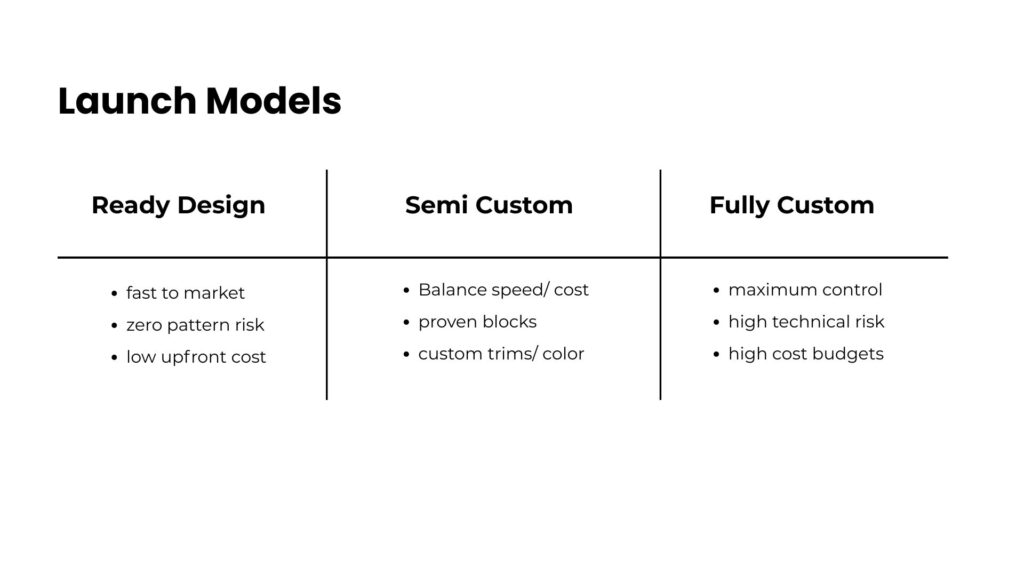
Another big mistake that slows down new founders is assuming that every brand must make custom patterns from scratch on day one. In reality, there are a few different paths to market. Each path offers a different balance of creative freedom, launch speed, upfront cost, and risk. Understanding these choices lets you pick a path that fits your budget and long-term goals.
1. Fully Custom Development
This is the traditional path where you design garments completely from scratch. You create custom tech packs, draft brand-new patterns, test measurements across all sizes, and make multiple rounds of test samples. While this option gives you total creative control, it costs a lot of money, takes specialized technical skill, requires large minimum order quantities from factories, and takes a long time—often eight to fourteen months. Fully custom development is usually best for established brands adding new lines, well-funded companies with experienced design teams, or brands whose main selling point is a brand-new structural idea.
2. Semi-Custom Development
Semi-custom development is one of the smartest and most affordable ways for a new swimwear brand to start. Instead of spending thousands of dollars testing brand-new suit shapes, you use existing, proven suit patterns as your foundation. From there, you customize the look and feel. You can choose unique fabrics (like switching from plain nylon to eco-friendly recycled materials or textured fabrics), pick custom colors, add branded metal hardware, change neckline heights, adjust straps, or tweak the fit. This strategy speeds up development time, cuts sampling costs, and eliminates the risk of making a suit that fits poorly, all while giving you a finished product that looks unique to your brand.
3. Ready Designs and Proven Styles
Many swimwear factories keep libraries of tested, popular swimsuit shapes that are proven to sell well. Using these ready-to-use designs is a very smart strategy that allows new business owners to launch quickly with very little upfront money. Because these styles have already been tested on hundreds of real bodies and produced in large quantities, you know they fit well and will hold up over time. You do not stand out by changing the shape of the swimsuit; you stand out through your brand name, color choices, marketing stories, nice packaging, great photos, and friendly customer service. Many famous online clothing brands actually started by using standard factory shapes, focusing their early time and energy on building a loyal customer base rather than making new patterns.
Build a Small, Focused Collection to Lower Your Risk
When preparing for their first launch, new business owners often fall into the “variety trap.” They think that offering a huge catalog of choices—lots of tops, bottoms, one-piece suits, cover-ups, and activewear in ten different colors—makes their brand look bigger, more professional, and more appealing to everyone. But in terms of running a business, launching with a huge collection is one of the fastest ways to run out of money.
Launching with too many items creates serious financial and operational problems:
- Tying Up Your Cash: Your money gets spread thin across too many items. You run out of stock on your best sellers while getting stuck with unsold sizes and styles that no one wants.
- Factory Delays: Manufacturing takes much longer when factories have to handle dozens of different design packs, custom prints, and special trims for one small brand.
- Confusing Marketing: A scattered collection makes it hard to tell a simple, clear story. Visitors come to your website, feel overwhelmed by too many choices, and leave without buying anything.
Brands that scale successfully almost always start small, focusing on a tight collection of 3 to 5 core styles. A smart launch collection uses a simple color plan—usually two classic neutral colors and one or two fun seasonal colors or prints—where every top can be mixed and matched with every bottom. This simple setup creates plenty of visual variety on your website while keeping your actual manufacturing list small and manageable.
Most importantly, starting small turns your first production run into a low-risk test. It lets you collect real sales data from real customers, see which styles sell fastest and get returned the least, and spend your money smartly on reordering proven winners instead of guessing what people might like.
Understand the Real Purpose of Sampling
The sampling phase is where creative ideas meet real-world sewing, and it is often where relationships between brand owners and factories get strained. First-time founders often expect the very first factory sample to arrive looking completely perfect, fitting like a glove, and ready for retail sale. When that first sample arrives with small fit issues, wrinkled seams, or slightly misplaced straps, founders sometimes panic, thinking the factory is bad or that their project is failing.
In real clothing manufacturing, the first sample (often called a prototype or fit sample) is meant to be a rough rough-draft working model. Its main purpose is to test basic proportions, see how the fabric stretches and recovers on a real body, check support, and figure out what small changes need to be made to the pattern. It is an evaluation tool, not a finished product ready for sale.
Development delays are rarely caused by factory mistakes alone; they are more often caused by how the owner handles the fitting process. Things slow down when owners give vague feedback (“it just doesn’t look right”), change their mind about core design details halfway through, or make emotional adjustments based on how a sample fits their own body rather than using a standard fitting model or size chart.
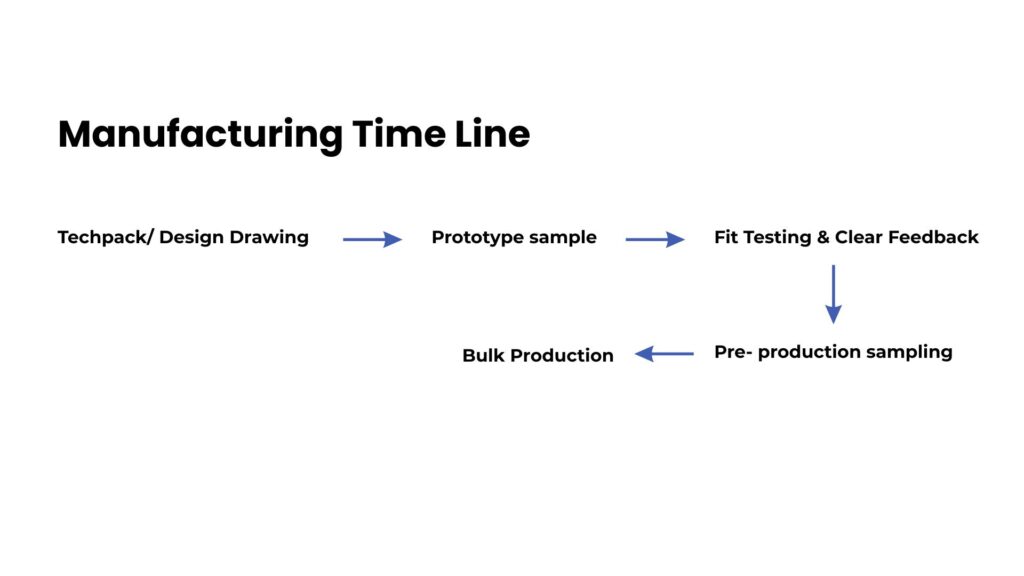
To handle the sampling process smoothly and quickly, follow a simple plan:
- Test on Standard Bodies: Always try samples on a professional fit model or a dress form that matches your target size chart. Check the fit both when the swimsuit is dry and when it is wet.
- Check the Quality: Pull on the seams to make sure the stitching stretches without breaking, check that the lining fabric stays hidden inside, and verify that the elastic bands feel secure without pinching the skin.
- Give Clear, Specific Instructions: Send the factory clear notes with photos and exact measurements (for example: “Shorten shoulder straps by 1.5 cm; make front rise coverage 2 cm wider”).
By viewing sampling as a practical step-by-step test rather than a quest for instant perfection, you keep your project moving on schedule, stay within your budget, and end up with durable, high-quality products.
Think Commercially, Not Emotionally
Creative passion is what inspires people to start a brand, but practical business thinking is what keeps the business open. A common mistake among new designers is making products too complicated. Wanting to stand out and look creative, new owners often add complicated strap arrangements, tricky cutouts, trend-heavy trims, delicate metal accents, and hard-to-sew details to their first collection.
While these complex suits might look cool in a photo, they often end up being bad for business once you actually try to sell them.
Simpler, classic swimsuit shapes consistently outperform overly complicated designs for several simple reasons:
- Better Fit for More People: Clean, simple shapes naturally fit different body types, torso lengths, and bust sizes much better than rigid, complicated strap layouts. Better fit means fewer customer returns—and returns are one of the biggest hidden costs in online selling.
- Easier Production: Simple designs take fewer steps to sew. This lowers your manufacturing costs, reduces factory mistakes, and lets you reorder stock much faster when items sell out.
- Broader Appeal: While a small group of fashion-forward shoppers look for unusual styles, the vast majority of people buy swimwear based on comfort, support, confidence, and timeless style.
Some of the most profitable and successful swimwear brands in the world rely on very simple suit shapes. Their real advantage does not come from complicated suit patterns; it comes from great brand messaging, clear photos, nice packaging, high-quality fabric choices, and a real connection with their audience. Keeping your products simple frees up your energy and money to focus on building a strong brand that keeps customers coming back.
Start Marketing Long Before Production Ends
Another major mistake new fashion founders make is waiting until all their products are finished and sitting in a warehouse before starting their marketing efforts. When you wait until your warehouse is full of boxes to start building an audience, you run into an immediate problem: your money is tied up in stock, storage costs start piling up, and your website receives zero visitors.
Successful swimwear launches run marketing and manufacturing at the exact same time.
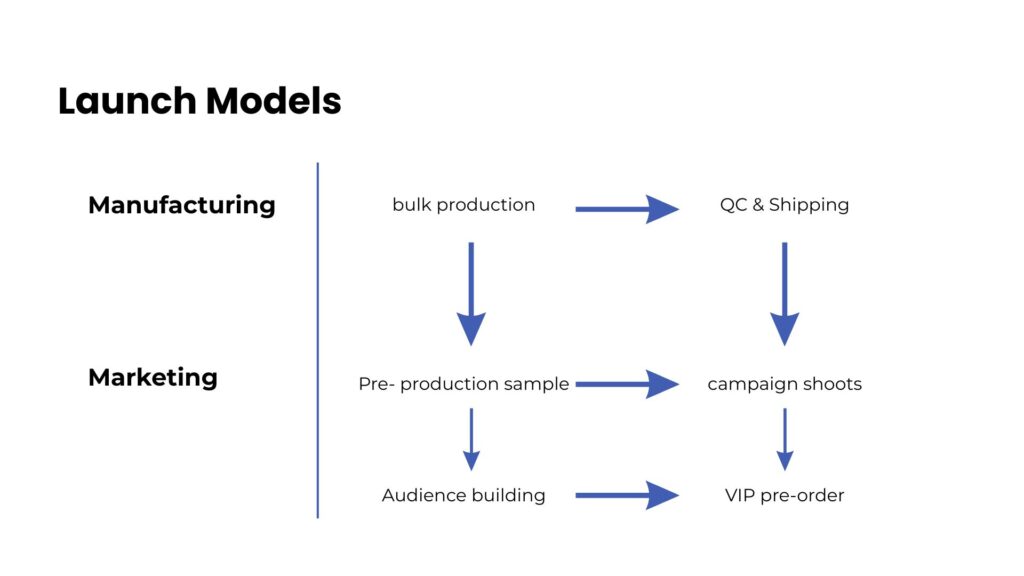
The moment your factory finishes approving your final pre-production samples, your marketing campaign should officially begin. The weeks spent waiting for bulk manufacturing to finish are your best opportunity to prepare your marketing:
- Take High-Quality Photos: Use your early sample suits to shoot your website photos and lifestyle campaign images. Make sure your photos show the lifestyle and feelings your brand represents, not just plain product shots.
- Build an Audience and Email List: Put up a simple coming-soon web page that displays preview photos, your brand story, and a sign-up box. Post short preview videos on social media to collect email addresses and phone numbers by offering early access or small launch discounts.
- Send Samples to Creators: Send early sample suits to relevant social media creators and micro-influencers who fit your target audience. Get authentic try-on videos, unboxing clips, and reviews to build trust before launch day.
- Run VIP Pre-Orders: Give your email subscribers the chance to pre-order key styles. This brings in early cash, shows you which colors and sizes are going to be most popular before full shipping starts, and builds excitement for launch day.
When you build excitement and gather an interested audience while your suits are still being made, launch day changes from a stressful gamble into an exciting event where you make sales right away.
Launch Lean, Learn Fast, and Make Improvements
New business owners often view their first brand launch like a huge movie premiere: everything must be 100% perfect, every possible product style must be available, and the launch itself feels like a single make-or-break moment. This high-pressure mindset causes unnecessary stress, creates long delays, and leads to overspending before you even know what customers actually want.
A much safer and smarter approach is to view your initial launch as a simple, lean test run. The real goal of your first collection is not to become an instant giant or create a permanent product line that never changes. The goal is simply to open your online store, gather real sales data, see how customers actually shop, and learn how to make your next run even better.
Once your website is live, pay close attention to a few simple numbers to guide your decisions:
- Sales by Style and Color: Look at which exact items convert visitors into buyers most often. This tells you what people actually want to buy versus what they just like or comment on in social media posts.
- Customer Return Reasons: Track why people return items. If a specific top is being returned because the fit feels too tight, you can fix that measurement before placing your next factory order, or update the size guide on your website to help future buyers choose the right size.
- Repeat Purchases: Watch how many customers come back to buy a second color or style within a month or two. High repeat sales prove that customers are happy with your fit, fabric, and overall quality.
The fashion brands that last for years are rarely the ones that had flawless products on day one. They are the flexible, customer-focused brands that pay attention to real feedback, fix small problems quickly, improve their fits based on real data, and grow their product line carefully as demand increases.
What Works vs What Fails
To summarize the main differences between swimwear brands that struggle and those that succeed, take a look at this simple comparison table:
| Launch Step | Struggling Brands | Successful Brands |
|---|---|---|
| Brand Concept | Focuses on complex designs based only on personal taste. | Focuses on a specific customer group and builds a clear brand identity around them. |
| Patterns | Tries to make complex custom patterns from scratch without technical experience. | Uses semi-custom changes or proven factory shapes to save money and avoid fit errors. |
| Collection Size | Launches with 15–20 styles, spreading money thin and taking high inventory risks. | Launches with 3–5 core styles that can be easily mixed and matched. |
| Sampling | Expects first samples to be perfect; makes frequent changes during the process. | Treats samples as quick test tools; systematically checks fit on standard model bodies. |
| Product Style | Over-complicates suits with tricky straps, leading to high return rates and high costs. | Picks flattering, comfortable cuts that fit many body types and cost less to make. |
| Marketing | Waits until all stock arrives in the warehouse before starting any marketing. | Builds an email list, sends samples to creators, and starts promotion while suits are being made. |
| Launch Mindset | Views launch as a single, static event; fears changing or dropping bad styles. | Views launch as a learning step; uses customer feedback to fix fits and reorder best sellers. |
Smart Execution Matters Most
Starting a swimwear brand today is less about inventing a completely new bikini shape and much more about smart planning and execution. Trying to create every single detail from scratch usually leads to high costs, long delays, and unnecessary stress.
By taking the time to understand your target audience, picking a sensible launch path, keeping your initial collection small, treating sampling as a practical step-by-step test, sticking to comfortable and proven suit shapes, and building your audience while production is happening, you set your business up to succeed.
Having an experienced, trusted factory partner makes this process much easier. Manufacturing partners like Bali Bikini Manufacturer specialize in helping new and growing brands navigate these exact choices—offering everything from custom design help to ready-to-use, proven swimsuit shapes. With a clear plan, smart spending, and reliable production support, you can turn your creative idea into a real, profitable swimwear brand.